

In industrial automation, control systems are rarely short-term investments. They’re expected to last for decades - integrating seamlessly with changing processes, adapting to evolving technologies, and remaining maintainable, efficient, and secure throughout their lifecycle.
But delivering that kind of long-term performance doesn’t just rely on engineering quality or the right hardware. It starts with good decisions - and continues with access to the right technical guidance at key moments of change.
That’s where technical control systems consultancy plays a critical role.
While early-phase planning typically receives the most attention, organisations often overlook the ongoing value of consultancy throughout the system’s life - from initial design and commissioning, to modernisation, migration, integration, and even cyber resilience.
Technical consultancy can support clients at every point of that journey - with hands-on, practical advice that ensures control systems are designed, implemented, and maintained with long-term performance and reliability in mind.
Consultancy at the Early Stages: Building Strong Foundations
Consultancy is most commonly associated with the start of a project - and for good reason. Early-stage decisions have lasting impact, shaping everything from system architecture and technology choices to the future cost and complexity of support.
Consultancy services help clients establish a clear technical direction during this formative phase, particularly when:
● Internal engineering teams are overstretched or under-resourced
● There is a need to integrate new systems with existing control infrastructure
● New lines or plants require bespoke control and automation strategies
● Organisations are comparing proposals or navigating competing supplier solutions
At this stage, expert consultancy can guide the development of control philosophies, advise on suitable platforms, and provide independent technical oversight to reduce ambiguity and risk.
Consultants also assist with drafting functional specifications, validating design proposals, and identifying gaps or conflicts in early planning - ultimately helping to ensure the right decisions are made before capital investment begins.
Beyond Project Kick-Off: Consultancy for Modernisation and Migration
While it is widely accepted that early support is crucial, many control systems face their most complex challenges years into operation - particularly as they approach obsolescence, require expansion, or need to respond to operational changes.
Legacy systems, even if still operational, can become increasingly difficult to maintain or adapt. Vendors may no longer support the platform, spare parts may be scarce, and integration with newer technologies may be problematic. Without the right expertise, organisations risk delaying essential upgrades or implementing them without a full understanding of long-term impacts.
It is at this stage that many organisations struggle, relying on internal knowledge and resources that may not have the depth and breadth of experience required. This is when consultancy can provide practical support for these challenges by:
● Conducting system audits to assess the feasibility of upgrades
● Advising on phased migration strategies that minimise disruption
● Supporting the development of retrofit or expansion specifications
● Identifying constraints, risks, and opportunities for improvement
Through adopting external support clients can modernise safely, maintain regulatory compliance, and extend the lifespan of their control assets - all while avoiding unnecessary costs or business risk.
A Growing Priority: Control System Security
As industrial automation becomes more connected, with increasing interaction between plant control systems, IT networks, and cloud platforms, security becomes a strategic concern.
Legacy systems were often designed before cyber resilience was a consideration. In many facilities, operational technology (OT) networks lack segmentation, monitoring, or access controls - making them vulnerable to intrusion, even unintentionally.
Control system consultancy is essential to bridging this gap. The right consultants work with clients to:
● Review and assess the security of existing control architectures
● Recommend segmentation, isolation, and layered protection
● Identify risks introduced by legacy equipment or unpatched firmware
● Help ensure that new integrations don’t compromise system integrity
This kind of security-focused consultancy is critical - not just for compliance, but for the long-term safety and reliability of the site.
Avoiding the Common Pitfalls
Without proper consultancy, even experienced organisations can encounter recurring project issues - especially when time pressures or cost constraints cause planning stages to be compressed.
Good consultancy can add value and help organisations avoid some of the most common pitfalls which include:
● Incomplete or unclear project scopes that cause delays later
● Gaps between user expectations and system functionality
● Designs that are over- or under-engineered for actual site needs
● Integration problems between new systems and existing infrastructure
Expert advice helps address these challenges early - before they escalate into costly redesigns, overruns, or operational limitations.
costly redesigns, overruns, or operational limitations.
Conclusion: Consultancy as a Strategic Advantage
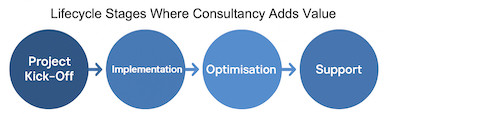
So whether you're defining a new system from the ground up, integrating with legacy infrastructure, planning for future expansion, or safeguarding against security threats, the right guidance at the right time can significantly reduce risk, prevent costly missteps, and optimise long-term outcomes.
One of the smartest moves organisations can make is to budget for ongoing consultancy input - not just at the start of a project, but throughout its life. As systems evolve, having structured access to external technical guidance gives you the flexibility to respond to:
● Regulatory changes
● Business growth or site expansion
● Emerging security threats
● Equipment obsolescence
With this long-term perspective, organisations can make proactive decisions instead of reactive fixes - resulting in more resilient, cost-effective automation infrastructure.
Silchester Control Systems brings not just technical knowledge, but real-world experience across a huge range of sectors and system lifecycles. Our consultancy services are designed to support clarity in decision-making, strengthen internal capability, and ensure that every project - large or small - is grounded in sound, scalable engineering principles.
By investing in consultancy as a strategic asset rather than a one-off input, organisations can build control systems that are not only fit for purpose today, but future-ready for years to come.
Learn how Silchester can support your next automation project - from concept through to compliance and beyond: Silchester Control Systems.


